
Theory of meaningful stakeholder dialogue
To help companies put meaningful stakeholder dialogue into practice, the SER has researched and analysed the subject. Extensive desk research and practical experimentation have led to the development of the model for meaningful stakeholder engagement.
This model provides the foundation for the Compass for Meaningful Stakeholder Dialogue and in-depth tools which help companies to actively listen to their stakeholders.
Definition of meaningful stakeholder dialogue
Meaningful stakeholder dialogue means that, as a company, you actively engage in dialogue with people and groups who are affected by your activities, products, or services, and that you take their perspectives seriously in your decision-making.
More information
- Stakeholders include, for example, employees (including those in the value chain), suppliers, trade unions, civil society organisations, or communities in production countries.
- Meaningful means that the dialogue goes beyond simply informing or consulting: stakeholders can safely share their perspectives at the right moment, there is clarity about what will be done with their input, and the conversation leads to concrete actions or follow-up steps. It is therefore not a one-off conversation, but an ongoing process of listening, learning, and improving.
- The aim is to better understand stakeholders’ experiences, concerns, and needs, and to incorporate these into your decision-making and business operations. This helps you gain better insight into risks and opportunities, prevent or address negative impacts, and build trust with those affected by your activities. This way of working aligns with international guidelines such as the OECD Guidelines and the UNGPs, and helps companies implement responsible business conduct (RBC) legislation and due diligence obligations.
- Key principles are trust, transparency, two-way communication, and continuity.
Humanising business
By engaging in meaningful, ongoing conversations, companies can better understand the actions required to protect and enhance stakeholder well-being. This approach is rooted in the concept of "humanising business", which emphasises a commitment to the well-being and flourishing of others.
More information
Companies that embed stakeholder dialogue into business processes create value for their own interests as well as for their stakeholders. Entering into dialogue means jointly exploring issues by actively listening, sharing experiences, and reflecting on needs and insights. The goal is to ensure that the outcomes of the dialogue are addressed collaboratively, maintaining continuous contact, rather than treating it as a one-off, tick-the-box activity.
Model for meaningful stakeholder dialogue
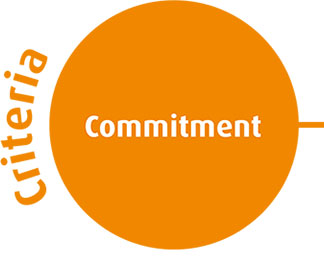
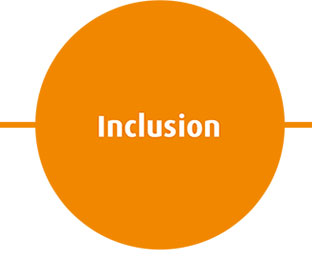
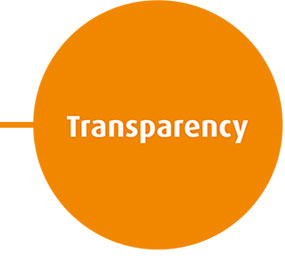
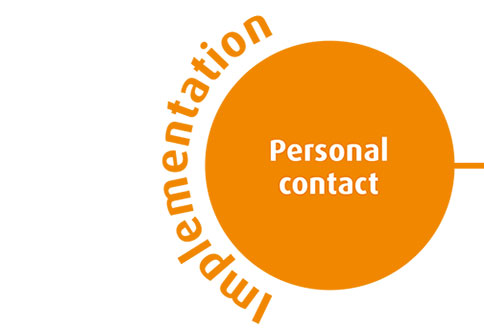
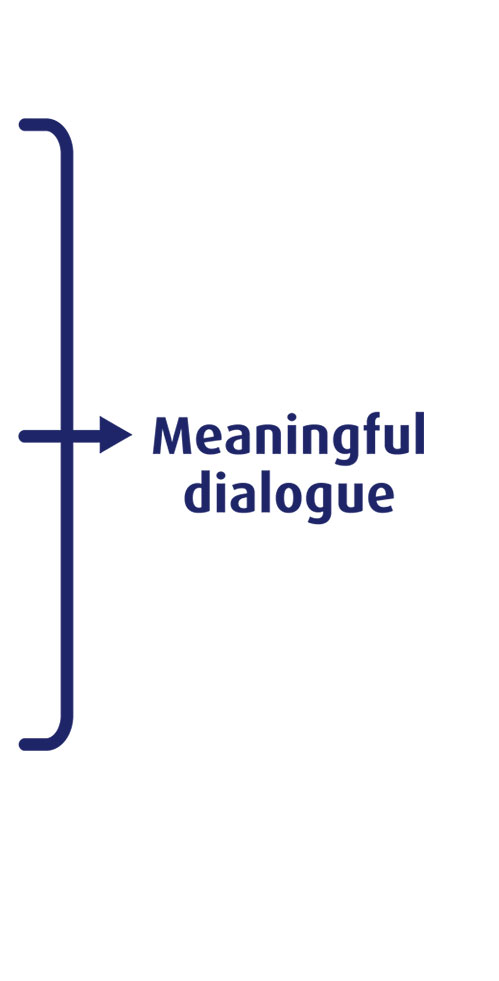
The SER has developed a model that provides the theoretical foundation for conducting meaningful stakeholder dialogue. This model is composed of various elements that should be considered when preparing, implementing, and following up a dialogue. These elements are organised into three categories: criteria, implementation, and support. Companies are encouraged to incorporate all elements into their approach, deciding which aspects require more focus depending on the specific dialogue they plan to initiate. The Compass for Meaningful Stakeholder Dialogue supports companies step-by-step in this process.
Click on one of the elements of the model to go directly to that element for more information.

|
 |
 |
 |
Motivation
A meaningful stakeholder dialogue starts with motivation. This refers to the reason(s) of a company (and its employees) to engage in dialogue with stakeholders.
More information
A company can have various reasons to conduct stakeholder dialogue. The motivation can arise from:
- Intrinsic motivation: the willingness to conduct dialogue
- External stimuli: the moeten to conduct dialogue (such as legislation or reputational risks)
Intrinsic motivation helps you to be open to the needs and concerns of stakeholders, and to take these into account in business operations and decision-making processes. The risk of a purely externally driven motivation is that stakeholder dialogue becomes a tick-the-box activity and gets ceased when no external stimulus is left, which rarely leads to meaningful results. Intrinsic motivation grows when experiencing the added value that stakeholder dialogue can bring.
Practical tools


Plan of action
The plan of action outlines the ongoing process of preparing, implementing, concluding, and following up on the dialogue, including the considerations to ensure a meaningful stakeholder dialogue.
More information
Practical tool
Commitment
Commitment means that the company is genuinely dedicated to engaging in dialogue with stakeholders and actively works to incorporate the results into its business operations.
More information
Companies must demonstrate their commitment, for instance by integrating meaningful dialogue into policies, allocating the necessary time, capacity, and resources, and through specific actions of the company. This could include actively promoting the stakeholder engagement policy or taking stakeholders feedback and signals seriously.
In addition to the company’s own commitment, it is important to consider the feasibility of dialogue and the level of commitment from other stakeholders. For more on this, see the element of ’Inclusion’.
Practical tools
Inclusion
Inclusion means engaging with the right stakeholders. A dialogue is considered inclusive when stakeholders are identified appropriately and effectively, and when they are actively supported in their participation, whether directly or through credible representation.
More information
By involving the right stakeholders, you ensure that their interests, needs, and first-hand knowledge are heard and considered. It is important to not only reach out to stakeholders you already know or have existing relationships with.
Engaging directly with (or through representatives of) stakeholders, rather than relying solely on distant experts or familiar contacts, allows companies to gather reliable information from the source. This approach leads to new perspectives, identification of the relevant risks, and more sustainable solutions and follow-up actions that are genuinely supported by those affected. An inclusive process also strengthens a company’s credibility, demonstrating a willingness to listen to all stakeholders—including those who may be critical of your operations.
To ensure an inclusive dialogue, it is essential to explore how stakeholders can participate and remove any barriers they may face. Consider factors such as safety and potential negative consequences of their engagement, power imbalances, physical distance, language barriers, and time constraints. Moreover, the dialogue must meet the needs of the stakeholder, as dialogue is a reciprocal process that cannot be imposed by companies. Understanding stakeholders’ motivations and interests helps foster commitment to the dialogue.
Practical tools
Transparancy
Transparency refers to the openness and clarity of communication between a company and its stakeholders about decisions, actions, processes and results during the preparation, implementation and follow-up of a dialogue.
More information
Transparent communication with stakeholders ensures that they enter into a dialogue with the right expectations. They know what can and cannot be achieved and whether their interests are sufficiently recognised and taken into account in the process. This generates trust and mutual understanding, provided you take confidentiality and sensitivity into account in the topics discussed.
Clarity, timeliness, relevance and completeness are important when communicating information transparently. In addition, you must communicate in an accessible manner via a communication tool that matches the stakeholders’ preferences. This approach will help them better understand whether a company does (not yet) take a certain decision or action.
Practical tools
Personal contact
Personal contact refers to the (physical) interaction with stakeholders before, during, and after a dialogue, as well as the way in which you build and nurture the mutual relationship.
More information
Personal contact forms the foundation of a dialogue. It helps foster mutual trust, openness during the conversation, and a safe, equal environment. This connection plays a role before, during, and after the dialogue:
- Before and after the dialogue, maintaining personal contact with stakeholders is essential to strengthen relationships and sustain the trust built during the engagement. The ultimate goal is to foster long-term relationships where both the company and stakeholders can easily communicate with one another. By staying connected with stakeholders, you lower the barrier to addressing complex or sensitive issues, promoting more fruitful conversations and deepening the relationship.
- During the dialogue, meaningful contact is established through an open, interested, and sincere approach to your stakeholders. Active listening is key, along with being mindful of power dynamics, cultural differences, varying experiences with dialogue, and knowledge of the subject matter. An external facilitator can assist to maintain a balanced and effective process.
Practical tools
Organising dialogue
Organising the dialogue involves thorough substantive and practical preparation to ensure that the dialogue's objectives are met and that stakeholders are meaningfully involved. This can range from one-on-one conversations to multi-stakeholder meetings.
More information
Good preparation fosters trust among stakeholders. Both before, during and after the dialogue, it is important to actively involve stakeholders in a meaningful way. Prior to the dialogue, you must agree on key topics, define the central question being explored, and clarify when and how the dialogue will be considered meaningful. During the dialogue, it is essential that stakeholders can contribute equally. Key factors to consider include the timing of the dialogue, the location and format of the dialogue, the language of communication, reporting methods, and how feedback will be handled. Additionally, assess whether you can effectively lead the dialogue yourself, or if an external facilitator is needed to ensure a balanced and productive conversation.
Practical tools
Internal processes
Internal processes encompass all managerial, operational, and supporting activities that are crucial to the success of stakeholder dialogue. This includes areas such as involved staff, work agreements, IT systems, and budgeting.
More information
The stakeholder dialogue approach is more likely to succeed when it is embedded within existing internal processes and supported by senior management. When leadership demonstrates commitment by integrating stakeholder dialogue into the company’s policies, they are responsible for ensuring that its implementation is feasible. The internal processes must then be sufficient to carry out these policies. Essential are:
- Coordination: who within the company is responsible for stakeholder dialogue, and how much capacity needs to be allocated or recruited for this? Is additional training required? Who has the mandate to make decisions on matters raised during the dialogue?
- Internal communication: how is internal alignment regarding stakeholder dialogue managed? When, how, what, and with whom are outcomes and developments communicated within the company, among others to ensure that external messages to stakeholders are clear and consistent?
- Budgeting: What (financial) resources are allocated for stakeholder dialogue, and how are these resources spent (or not spent)?
Practical tools
Collaboration
Collaboration refers to working with other parties - such as companies, trade associations, trade unions, NGOs, knowledge networks, and governments - during the preparation, implementation, and follow-up stages of a dialogue.
More information
Since most companies are not experts in stakeholder dialogue, seeking collaboration can be highly beneficial. Working with external partners offers many advantages, including access to valuable knowledge, the ability to verify information, connection to relevant networks, expert advice on structuring and following up on dialogues, increased influence, enhanced legitimacy, and logistical support for organising and coordinating efforts.
When entering into collaborations, it is important to build long-term relationships that respect the capacity and interests of the stakeholders you are working with. Collaborating with experts and organisations in production countries is particularly beneficial. These partners have in-depth knowledge of local conditions, cultural nuances, and specific challenges. However, collaboration may be difficult in regions where civil society is under pressure and the space to advocate for human rights is shrinking. In such cases, civil society organisations may be reluctant to share information due to safety concerns or may lack the capacity to take effective action.
Knowledge
Knowledge refers to the understanding of the legal, political, economic, cultural, and social context of the stakeholders, country or supply chain involved, necessary for conducting a stakeholder dialogue.
More information
Knowledge fosters a meaningful dialogue, since it enables participants to engage in more in-depth conversations about complex topics. Conversations reach greater depth when all parties have a solid understanding of the topics at hand. Moreover, knowledge enhances credibility and builds mutual trust when all participants are well-informed about the subject matter.
However, while factual knowledge is important, there must also be space for emotion and differing perspectives. By paying attention to emotions and varied perspectives, participants can avoid getting stuck in debates over facts that may not address the core of the subject matter.
Practical tools
Further reading
Do you want to read more about meaningful stakeholder dialogue in (international) value chains? Consult these sources.
- Meaningful Stakeholder Engagement: Practical guidance for companies in the agriculture and food manufacturing sector (Oxfam, 2026)
- Technical Guidance on Meaningful Stakeholder Engagement in Garment, Apparel and Textile Sectors (STITCH, 2025)
- What “good” looks like: Meaningful stakeholder engagement (GBI, 2025)
- The Framework on Meaningful Stakeholder Engagement (STITCH, 2025)
- Boek: The Routledge Handbook on Meaningful Stakeholder Engagement (Karin Buhmann, Alberto Fonseca, Nathan Andrews, en Giuseppe Amatulli, 2024)
- Meaningful rights holder engagement: An introduction (Oxfam, 2023)
- The Protection and Promotion of Civic Space: Strengthening Alignment with International Standards and Guidance (OECD, 2022)
- Book (in Dutch): Anders groeien, Een medemenselijke aanpak van duurzaam en maatschappelijk ondernemen (Harry Hummels en Erik Hilgers, 2022)
- Book (in Dutch): Van winst naar waarde; Door stakeholderengagement naar langetermijnwaardecreatie (Frank Peters, 2022)
- What makes stakeholder engagement meaningful? 5 insights from practice (United Nations Global Compact Network Germany, 2022)
- Cross-cutting: stakeholder engagement – Human rights impact assessment guidance and toolbox (The Danish Institute for Human Rights, 2020)
- Recommendations for stakeholder and civil society organisation engagement (Fair Labor Association & SER, 2019)
- OECD Due Diligence Guidance for Responsible Business Conduct (OECD, 2018)
- Meaningful Stakeholder Engagement (Multilateral Financial Institutions Group on Environmental and Social Standards, 2018)
- Due Diligence Guidance for Meaningful Stakeholder Engagement in the Extractive Sector (OECD, 2017)
- Book: The Culture Map; Decoding how people think, lead, and get things done across cultures (Erin Meyer, 2016)
- Doing business with respect for human rights, A guidance tool for companies – chapter 3.7 (United Nations Global Compact Network Netherlands, Oxfam Novib, Shift, 2016)
- Stakeholder Engagement in Human Rights Due Diligence (The Global Compact Network Germany, 2014)
- Bringing a Human Rights Lens to Stakeholder Engagement (Shift, 2013)
More information and project update
Do you have a question or suggestion? Please contact us at secretariaatimvo@ser.nl.
Want to receive the project update? Register here.
The SER project 'Meaningful stakeholder dialogue in (international) supply chains' is partner of Humanising business, supported by the Goldschmeding Foundation.