
Compass for Meaningful Stakeholder Dialogue
A meaningful dialogue with your stakeholders requires direction, preparation, and continuity. The ‘Compass for Meaningful Stakeholder Dialogue’ guides you through this process. Step-by-step, it helps in setting up and conducting a stakeholder dialogue.
|
|
|
|
North: Run-up | Determine your starting point
In the run-up phase, you explore why you want to engage with (external) stakeholders, how strong the commitment is within your company, and who your stakeholders are. At this stage, you do not yet choose a specific approach. This phase lays the foundation for trust and direction and determines how effective the rest of the process will be.
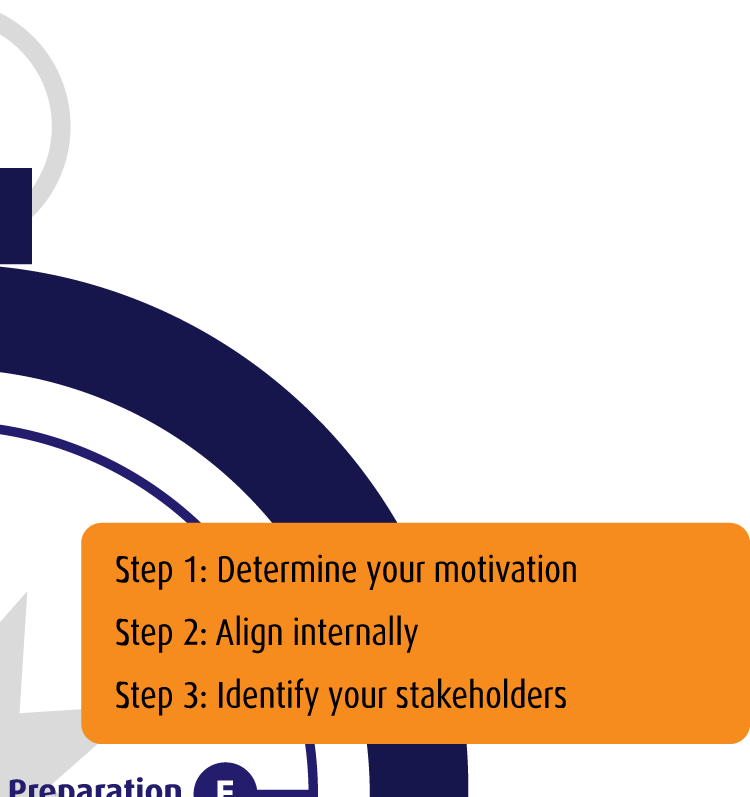
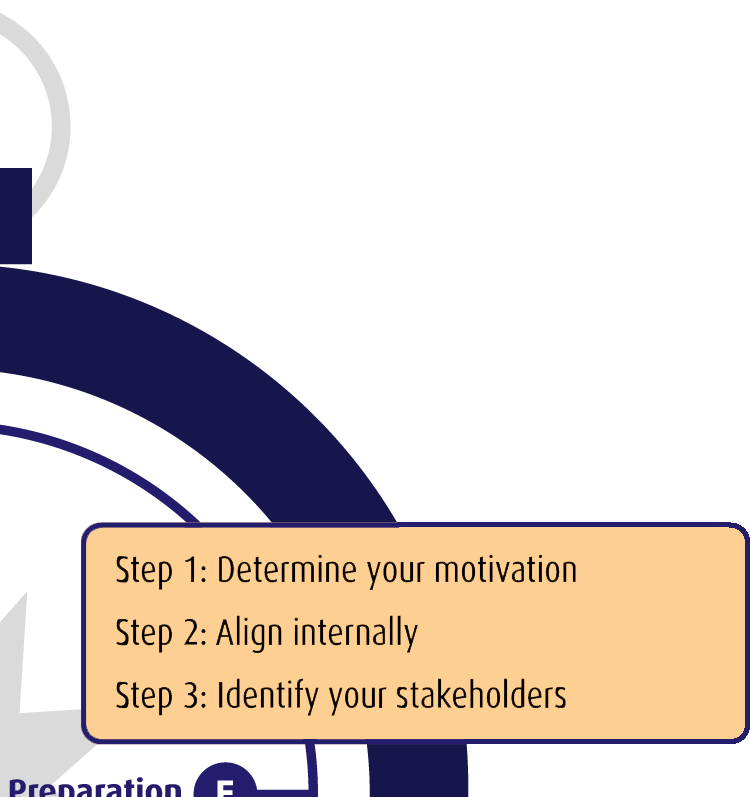
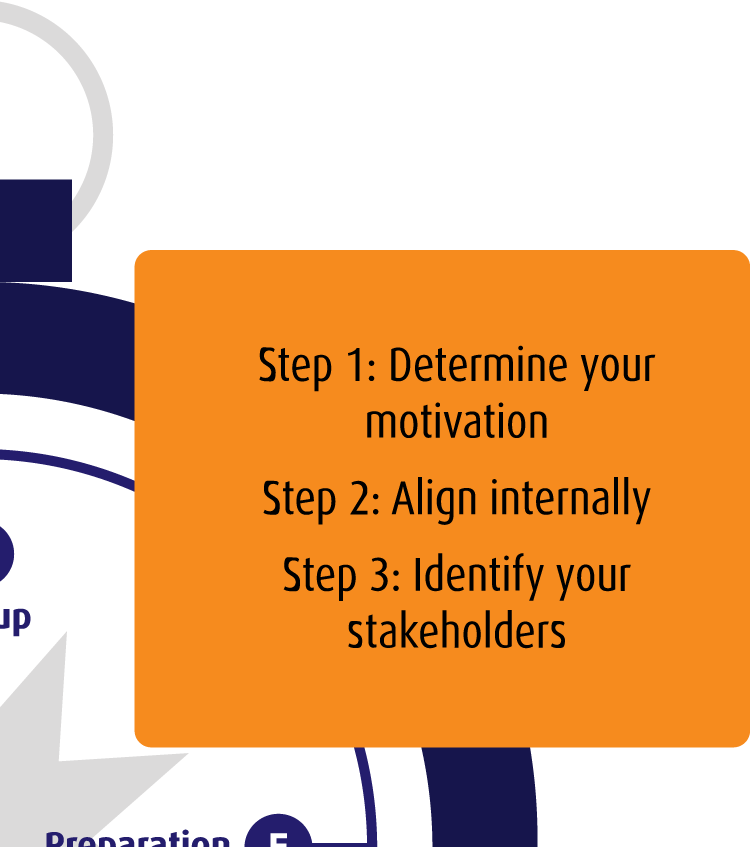
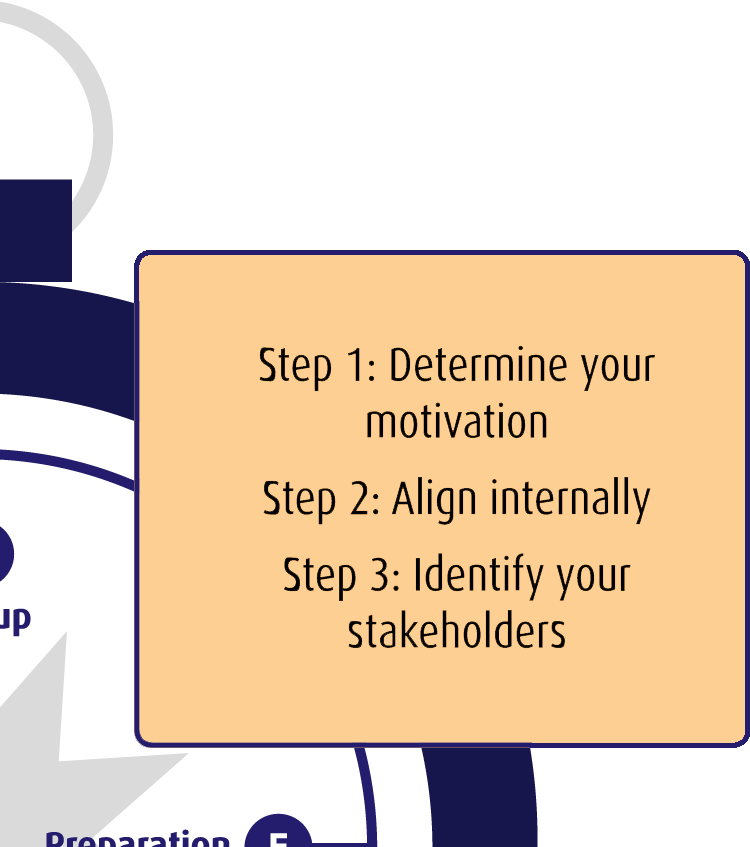
Step 1: Determine your motivation
Know why you want to engage in dialogue with stakeholders
Every meaningful stakeholder dialogue begins with a clear starting point. Your company’s motivation determines not only why you engage in dialogue, but also how credible and effective it will be.
Motivation can arise from external stimuli, such as legislation or reputational risks, but also from intrinsic values such as social responsibility or sustainable growth. Intrinsic motivation is often more powerful, because it ensures long-term commitment and a solid foundation for the dialogue.
Understanding your motivation helps you to:
- Communicate honestly with stakeholders.
- Set the right tone and manage expectations properly.
- Make more targeted choices in the subsequent steps of the process.
Useful tool
The added value of dialogue for your company - helps to sharpen and strengthen the motivation for stakeholder dialogue.
Watch the video’s and get inspired by companies that are exploring and developing good practices.
Step 2: Align internally
Ensure that your company is ready to meet expectations
A stakeholder dialogue creates expectations. As soon as you enter into dialogue, stakeholders expect that you will actually do something with their input. Internal commitment is therefore crucial.
Commitment means that you are prepared to:
- Provide sufficient time, resources and capacity.
- Make decisions based on the dialogue.
- Be transparent about what you can and cannot do.
Check whether policy, strategy and capacity are adequate and ensure internal support to follow up on results. In this way you build trust even before the first conversation.
Useful tool
Internal alignment for successful dialogue - helps you understand where additional internal alignment may be needed.
Prevent misunderstandings by aligning communication with stakeholders internally first.
Step 3: Identify your stakeholders
Know who your stakeholders are
A meaningful dialogue begins with a clear picture of who your stakeholders are.
- Identify stakeholders based on the risk of negative impact on people and the environment. These stakeholders often have limited opportunities to make their voices heard.
- Analyse their position, interests and potential contribution to a dialogue.
- Research the relationship and/or how you can reach your stakeholders.
- Identify your stakeholders together with colleagues from different departments
Useful tool
Identifying your stakeholders - helps with the systematic identification and analysis of stakeholders.
Identify stakeholders beyond your current network to avoid blind spots; do not focus solely on existing relationships.
Run-up completed
After steps 1 through 3, you have determined your starting point. You know why you want to engage in dialogue, who your stakeholders are, and your company is prepared for the process. With this solid starting point, you increase the chance of an open and meaningful dialogue.
East: Preparation | Set your course
In the preparation phase, you build upon the starting point that you established in phase 1. You develop the reason for the stakeholder dialogue into a concrete action plan. Together with your stakeholders, you decide what will be discussed, with whom, and how the conversation will be organised. Careful preparation prevents surprises during implementation and increases the likelihood of a meaningful dialogue.
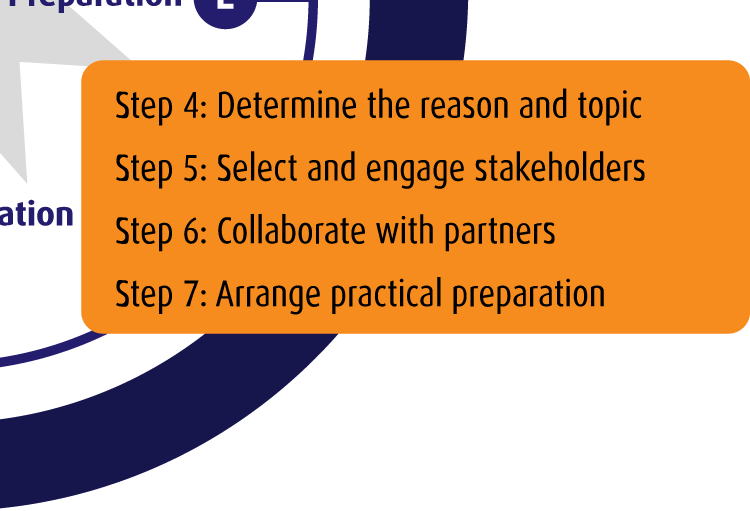
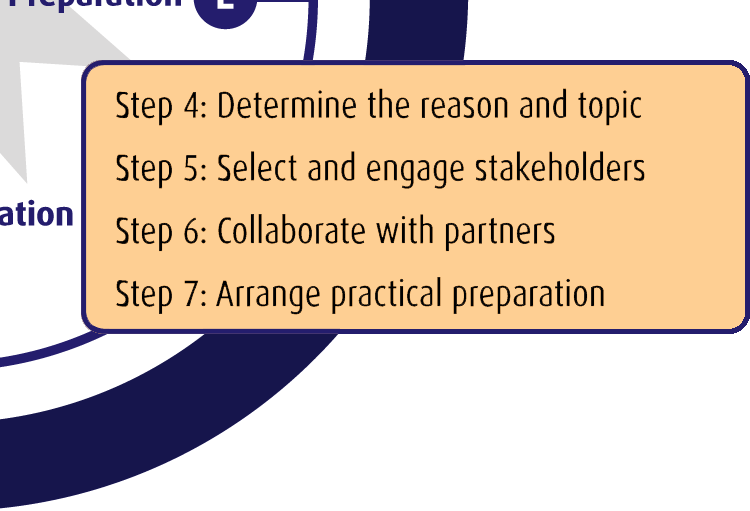
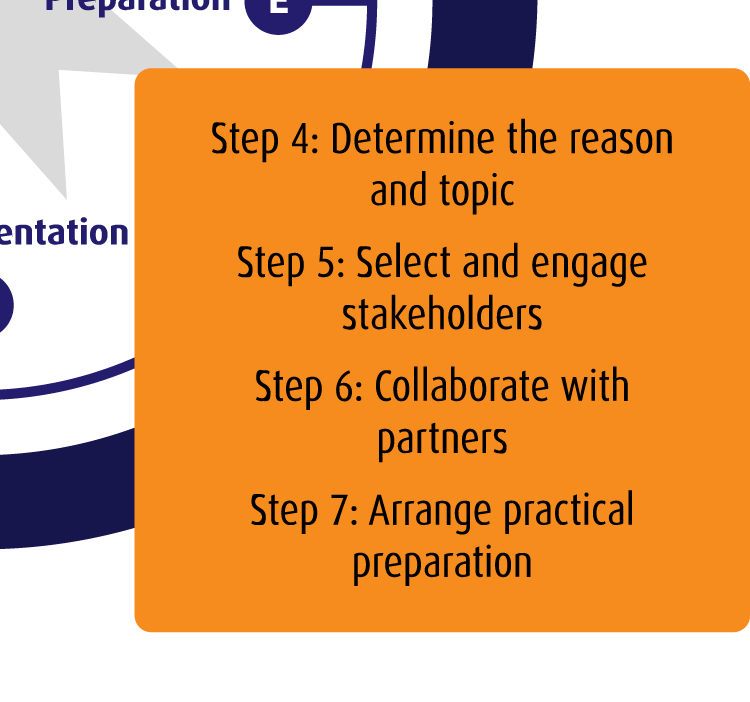
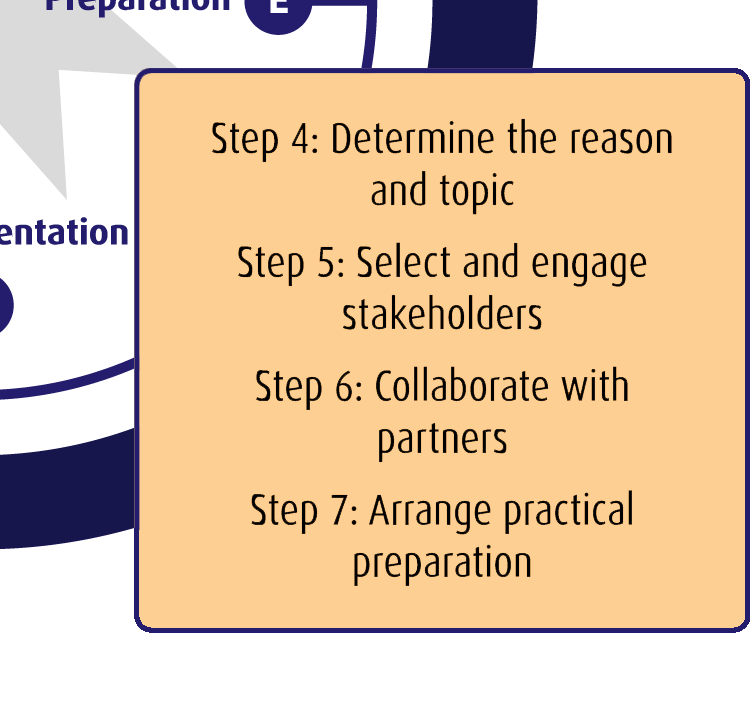
Step 4: Determine the reason and topic
Know what the dialogue should be about
A stakeholder dialogue is more effective when the purpose and topic of the engagement are clearly defined. By sharply defining in advance why this particular theme needs to be discussed now, you give direction to the dialogue. This also helps you in selecting stakeholders (see step 5).
Substantive preparation:
- Make the topic concrete and well defined.
- Formulate a clear objective and central questions.
- Connect relevant facts and information.
- Identify possible sensitivities or tensions. Take into account the legal, political, and cultural context.
Useful tool
Considering country-specific and cultural factors - offers insight into legal, political, technical, cultural, and social circumstances, that may influence the dialogue.
Keep in mind that the dialogue topic may change when you start involving stakeholders.
Step 5: Select and engage stakeholders
Ensure you engage with the right people
Step 5a: Select the right stakeholders
The value of a dialogue strongly depends on whom you speak with. Select stakeholders who are impacted by the topic and who can contribute relevant knowledge or experience. Involve not only the familiar faces, but in particular also stakeholders who offer new perspectives, ask critical questions, and disclose risks.
Use the following criteria in your selection:
- Look at impact: who is affected by the topic?
- Look at knowledge and experience: who can share valuable insights?
Step 5b: Involve stakeholders in the right way
Now that you have selected your stakeholders, it is time to involve them.
- Be clear about why you want to conduct the dialogue, what you expect from stakeholders, and what they can expect from you.
- Take into account their capacity, safety, and other conditions.
- Be open to their ideas so that the dialogue becomes meaningful for all those involved.
Useful tools
Identifying your stakeholders - supports stakeholder selection.
When and how to share information? - shows what information you should share with stakeholders prior to the dialogue.
Step 6: Collaborate with partners
Join forces and create support
It is often valuable to organise a stakeholder dialogue together with other parties. Think of industry associations, supply chain partners, or civil society organisations. By collaborating, you increase network, knowledge, legitimacy, and shared responsibility.
- Explore possible collaboration partners.
- Make agreements about roles, responsibilities, and communication.
- Ensure a jointly supported approach and clear division of tasks.
Useful tool
Who to partner up with? - provides guidance on with whom and how you can best collaborate in your specific situation.
You do not have to conduct a stakeholder dialogue alone; seek collaboration with others, for example through your industry association.
Step 7: Arrange practical preparation
Build the right conditions for a good conversation
A good dialogue requires clear parameters. By arranging practical matters in advance, you enable stakeholder participation.
- Choose a suitable format and location (check the accessibility and safety of the setting).
- Send out invitations and information well in advance.
- Arrange technology, logistics, and interpreters if necessary.
- Consider a facilitator and align roles.
- Consider how to record relevant information during the meeting and how to feed back afterwards.
- Be culturally sensitive in your preparations.
Useful tools
Checklist dialogue meeting en checklist dialogue meeting in the supply chain - for an overview of to-dos when organising a dialogue meeting.
What makes a good facilitator? - to assess the need for a facilitator..
Careful preparation can strengthen stakeholder trust even before the conversation starts.
Preparation completed
With steps 4 through 7, you have set the course. You know what the dialogue will be about, with whom you want to engage, and how you will organise the dialogue. Through careful preparation, you have established the right conditions for a meaningful dialogue.
South: Implementation | Conduct the dialogue
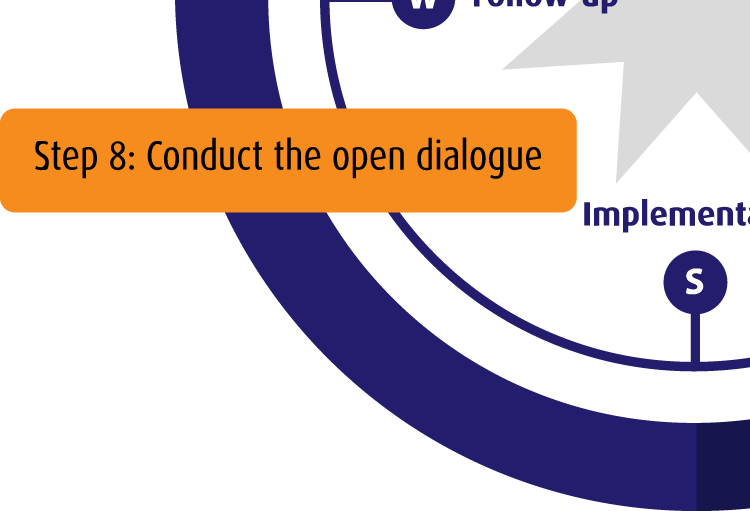
In the implementation phase, the actual dialogue takes place. This is when planning and preparation come together. A good dialogue is open, equal, and constructive. It is not about convincing, but about listening, understanding, and creating new insights together. The better you conduct the dialogue, the greater the likelihood that the conversation will lead to trust and concrete follow-up.
Step 8: Conduct the open dialogue
Enable genuine exchange
Step 8a: Create space for an open conversation
A good dialogue requires attention to how the conversation is conducted. This goes beyond listening and talking; it is about creating space for genuine exchange.
To make the conversation meaningful:
- Show genuine interest and ask open, inviting questions.
- Listen with the intention to understand, not to respond or to judge.
- Be open to critical feedback and input.
- Ensure equal contribution by all participants.
- Be flexible. Sometimes the dialogue requires a different direction than initially planned.
- Be aware of the influence of power imbalances on the conversation.
These ground rules help participants feel comfortable being honest during the dialogue. This does not mean that the conversation will always be harmonious. In case of conflicting interests, tensions can arise. Channel the tensions to foster deeper understanding rather than cutting off the dialogue, possibly with the help of a facilitator.
Useful tools
Good practices in conducting dialogue - for applying and practicing conversation skills.
Asking the right questions - for asking questions that encourage an open conversation.
When and how to share information? - for determining what information you should share during the dialogue.
Step 8b: Conclude the conversation
Ensure good closure:
- Summarise the main points.
- Identify together what follow-up is needed.
- Agree on who is responsible for what.
- Plan a follow-up moment or action to secure progress.
Conversations are often complex and take place under pressure. Conducting a dialogue requires practice, especially regarding complicated or sensitive topics. Improvement comes through practice.
Implementation completed
In step 8, you have experienced what makes a meaningful dialogue. You practised listening without judgement, asking open questions, and creating space for different perspectives. You discovered that tension is not something to avoid, but can actually be a source of insight. By concluding the conversation in a good way, you have ensured that words can turn into action.
West: Follow-up | Stay on course
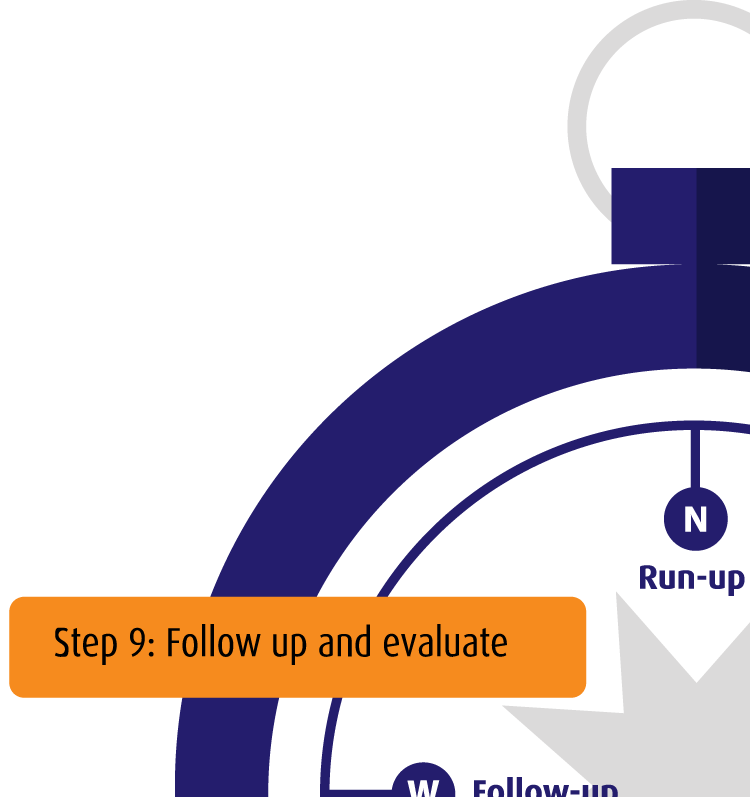
The conversation has taken place, but the process does not stop here. This phase is about feedback, following up, and learning. By honouring agreements made and reflecting together on the results, you stay on course and continue to build trust and continuity.
Step 9: Follow up and evaluate
Show that the dialogue matters and build towards sustainable collaboration
Step 9a: Provide feedback
Inform internal and external stakeholders of the outcomes and agree on clear follow-up steps. Pay attention to:
- Share results and possible next steps with internal stakeholders in a timely manner.
- Align together on how agreements will be followed up.
- Provide written feedback on agreements to involved stakeholders.
- Be transparent about how outcomes will be implemented or utilised.
Step 9b: Honour agreements and commitments
By taking agreements seriously, you strengthen trust and credibility.
Ensure that you:
- Follow up on commitments or explain why this is not (immediately) possible.
- Continue monitoring results and actively keep stakeholders informed of progress.
- Are transparent about delays or limitations.
- Make relevant results visible in policy, decisionmaking, and reporting.
Useful tool
When and how to share information? - for determining what you share afterwards.
Step 9c: Evaluate the dialogue and the results
Reflect together with internal and external stakeholders about the process and the outcome:
- Have the objectives of the dialogue been achieved?
- What has the dialogue delivered for your company and the stakeholders involved?
- What needs to be discussed further?
Go back to the preparation phase to shape the followup dialogue. Take into account the lessons from the evaluation to improve your approach or extend the dialogue to other stakeholders.
Useful tool
Five common pitfalls - to evaluate whether you have avoided the common pitfalls for meaningful dialogue.
Schedule the next conversation to continue the dialogue.
Follow-up
In this phase, you have followed up on the dialogue. By communicating clearly and by being transparent about progress and results, you have further strengthened trust. This is a good starting point for further dialogue.
North: Run-up | Determine your starting point ↑
Feedback and project update
Do you have a question or suggestion regarding the Compass, or want to share your user experience? Please contact us at secretariaatimvo@ser.nl.
Want to receive the project update? Register here.
The SER project 'Meaningful stakeholder dialogue in (international) supply chains' is partner of Humanising business, supported by the Goldschmeding Foundation.